Why Professional EV Charger Installation Is the Smart Choice for Every Electric Vehicle Owner
Electric vehicles are becoming a common sight on roads as more drivers look for efficient and environmentally responsible transportation. While owning an electric vehicle offers many benefits, having a reliable charging solution at home or your business is equally important. Depending solely on public charging stations can be inconvenient, especially during busy hours or long trips.
A professionally installed EV charger provides fast, safe, and dependable charging whenever you need it. It also protects your electrical system, supports your vehicle’s charging requirements, and adds value to your property. Whether you own a single electric vehicle or manage a fleet, professional installation ensures your charging equipment performs efficiently for years.
This guide explains the advantages of professional EV charger installation, the installation process, and why working with a qualified electrician is the safest investment.
What Is an EV Charger?
An EV charger supplies electricity to recharge an electric vehicle’s battery. While every electric vehicle can be connected to a standard household outlet, dedicated charging equipment significantly improves charging speed and convenience.
The most common charging options include:
- Level 1 chargers
- Level 2 chargers
- DC fast chargers
For most homes and small businesses, a Level 2 charger offers the ideal balance between charging speed, cost, and daily convenience.
Benefits of Professional EV Charger Installation
Installing an EV charger involves more than simply connecting equipment to an electrical outlet. Professional installation ensures every component meets electrical safety standards and manufacturer requirements.
Major benefits include:
- Faster charging times
- Safe electrical connections
- Reliable performance
- Protection against electrical overload
- Proper circuit installation
- Compliance with local electrical codes
- Longer equipment lifespan
- Reduced maintenance requirements
Professional installation minimizes the risk of electrical hazards while providing dependable charging every day.
Charge Your Vehicle Faster
Charging speed is one of the biggest advantages of installing a dedicated EV charger.
A standard household outlet may require more than a full day to recharge some electric vehicles. A professionally installed Level 2 charger can significantly reduce charging time, making it easier to keep your vehicle ready for daily driving.
Faster charging is particularly valuable for households with multiple drivers or vehicles that travel long distances each day.
Improve Electrical Safety
Electric vehicle chargers draw a substantial amount of electricity during operation. Improper installation can create serious safety risks, including overheating, overloaded circuits, damaged wiring, or electrical fires.
Professional electricians evaluate your home’s electrical capacity before installation. They ensure that wiring, breakers, grounding, and protective devices are properly installed to support the charger safely.
A correctly installed charging system helps protect both your property and your vehicle.
Ensure Compatibility With Your Vehicle
Different electric vehicles have different charging capabilities and connector requirements.
Professional installers verify compatibility between:
- The charging unit
- Your electrical system
- Your vehicle
- Future charging needs
Selecting the appropriate charger allows your vehicle to charge efficiently without unnecessary limitations.
Protect Your Electrical Panel
Not every electrical panel has enough available capacity for a dedicated EV charger.
Before installation, a qualified electrician inspects the electrical panel to determine whether upgrades are necessary.
If additional capacity is required, the installer may recommend:
- Panel upgrades
- Dedicated circuits
- New breakers
- Load management systems
These improvements help ensure reliable charging without affecting other household electrical appliances.
Increase Property Value
As electric vehicles continue to grow in popularity, homes equipped with EV charging infrastructure become more attractive to buyers.
A professionally installed charging station offers:
- Greater convenience
- Modern functionality
- Future-ready infrastructure
- Added appeal for prospective homeowners
Commercial properties can also benefit by providing charging access for employees, tenants, and customers.
Reduce Dependence on Public Charging Stations
Public charging stations remain an important part of the EV network, but they may not always be available when needed.
Home charging provides several advantages:
- Charge overnight
- Avoid waiting in line
- Start each day with a full battery
- Reduce travel time to charging stations
- Improve daily convenience
Having a charger at home gives drivers greater flexibility and control over their charging schedule.
Support Smart Charging Features
Many modern EV chargers include advanced features that improve efficiency and user convenience.
Common features include:
- Scheduled charging
- Mobile app control
- Energy monitoring
- Wi-Fi connectivity
- Automatic software updates
- Load balancing
- Charging history reports
Professional installation ensures these features are configured correctly and operate as intended.
The EV Charger Installation Process
Professional installation follows a structured process to ensure safety and long-term performance.
Typical installation steps include:
Site Assessment
The electrician evaluates the installation location, electrical panel, available power capacity, and charging requirements.
Equipment Selection
The charger is selected based on vehicle compatibility, charging speed, available electrical capacity, and future expansion plans.
Electrical Upgrades
If necessary, the electrical panel or wiring is upgraded to support the new charging equipment safely.
Charger Installation
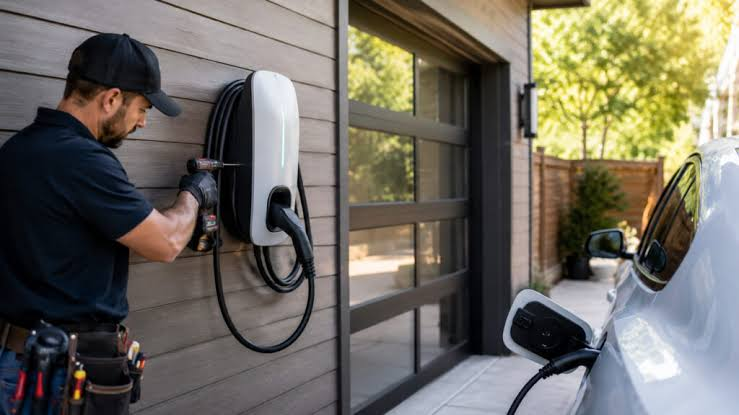
The charging unit is securely mounted, connected to a dedicated circuit, and tested for proper operation.
Final Inspection
The completed installation is inspected to confirm compliance with local electrical codes and manufacturer specifications.
Indoor and Outdoor Installation Options
EV chargers can be installed in various locations depending on the property’s layout.
Common installation areas include:
- Attached garages
- Detached garages
- Carports
- Driveways
- Commercial parking areas
- Apartment parking spaces
Outdoor chargers are designed to withstand changing weather conditions while maintaining reliable performance.
Why Hire a Licensed Electrician?
Installing an EV charger requires specialized electrical knowledge.
Licensed electricians understand:
- Electrical load calculations
- Circuit protection
- Grounding requirements
- Local building regulations
- Manufacturer installation guidelines
- Electrical safety standards
Professional installation reduces the risk of future electrical problems while ensuring dependable operation.
Tips for Safe EV Charging
To keep your charging system operating efficiently:
- Inspect charging cables regularly.
- Keep the charging area clean and dry.
- Avoid using extension cords.
- Follow the manufacturer’s operating instructions.
- Schedule periodic electrical inspections.
- Replace damaged charging equipment immediately.
- Keep the charger free from physical damage.
Routine maintenance helps maximize equipment lifespan and charging performance.
Choosing the Right EV Charger
When selecting an EV charger, consider factors such as:
- Charging speed
- Vehicle compatibility
- Cable length
- Installation location
- Smart charging features
- Weather resistance
- Warranty coverage
- Future vehicle upgrades
Choosing the right equipment ensures your charging system continues to meet your needs as technology evolves.
Conclusion
Professional EV charger installation provides the convenience, speed, and safety that electric vehicle owners need for everyday driving. A properly installed charging system reduces charging times, protects your home’s electrical system, and ensures reliable performance while supporting the growing demand for electric transportation.
Whether you are installing a charger at your home, workplace, or commercial property, working with a qualified electrician helps ensure the system meets electrical safety standards and operates efficiently for years to come. Investing in professional installation today creates a dependable charging solution that supports your vehicle, your property, and your future transportation needs.