Tree Pruning: The Complete Guide to Healthy Growth
Trees provide shade, improve air quality, support wildlife, and increase the value of residential and commercial landscapes. Like any living plant, trees require regular care to remain healthy and structurally sound. One of the most important maintenance practices is tree pruning. Proper pruning removes unwanted branches, improves tree structure, reduces safety hazards, and encourages steady growth.
Many people believe pruning is simply cutting branches to improve appearance. In reality, it is a planned process that helps trees develop a strong framework while reducing the risk of disease, storm damage, and branch failure. Using the correct pruning methods at the right time protects the tree and supports healthy development for many years.
In this guide, you will learn the best tree pruning techniques, the tools required, the right time to prune, and the mistakes to avoid.
Why Tree Pruning Is Important
Tree pruning is an essential part of tree care. Regular pruning offers several benefits that improve the health and stability of a tree.
Some of the main advantages include:
- Removes dead and damaged branches
- Improves air circulation throughout the canopy
- Allows sunlight to reach inner branches
- Reduces the spread of pests and diseases
- Encourages balanced branch development
- Improves fruit and flower production in suitable species
- Prevents branches from interfering with buildings, roads, and power lines
- Reduces the risk of broken limbs during storms
Proper pruning also helps maintain the natural shape of the tree while preventing structural problems that may become expensive to correct later.
Essential Tree Pruning Tools
Using the right tools makes pruning safer and produces cleaner cuts that heal more quickly.
Hand Pruners
Hand pruners are suitable for cutting small branches up to one inch in diameter. They are commonly used for routine maintenance and young trees.
Loppers
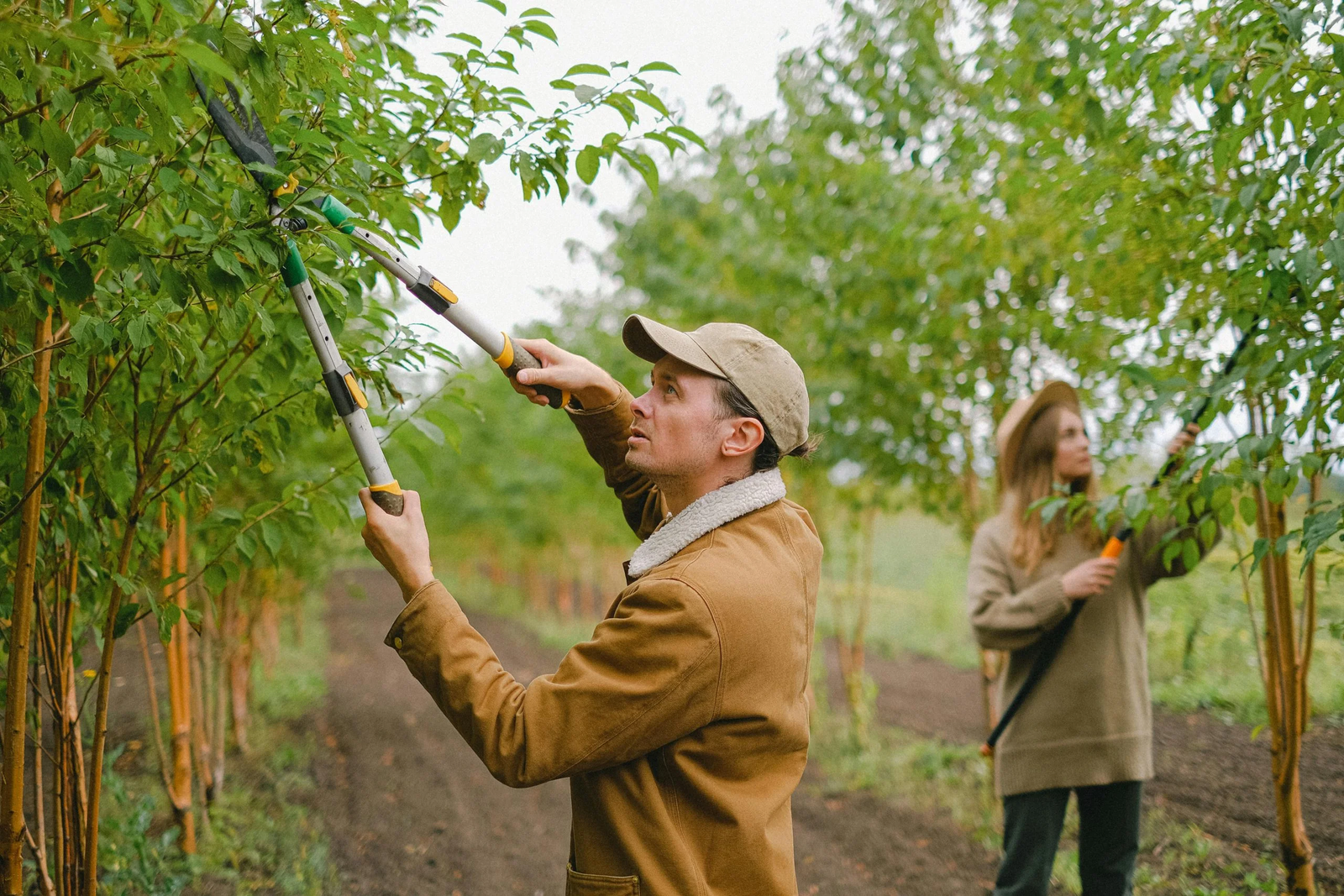
Loppers have long handles that provide additional leverage for cutting medium-sized branches between one and two inches thick.
Pruning Saw
A pruning saw is designed for removing larger branches that cannot be cut with hand pruners or loppers. Its curved blade allows efficient cutting through thicker wood.
Pole Pruner
Pole pruners help reach higher branches without climbing the tree. They are useful for removing small limbs from taller trees.
Safety Equipment
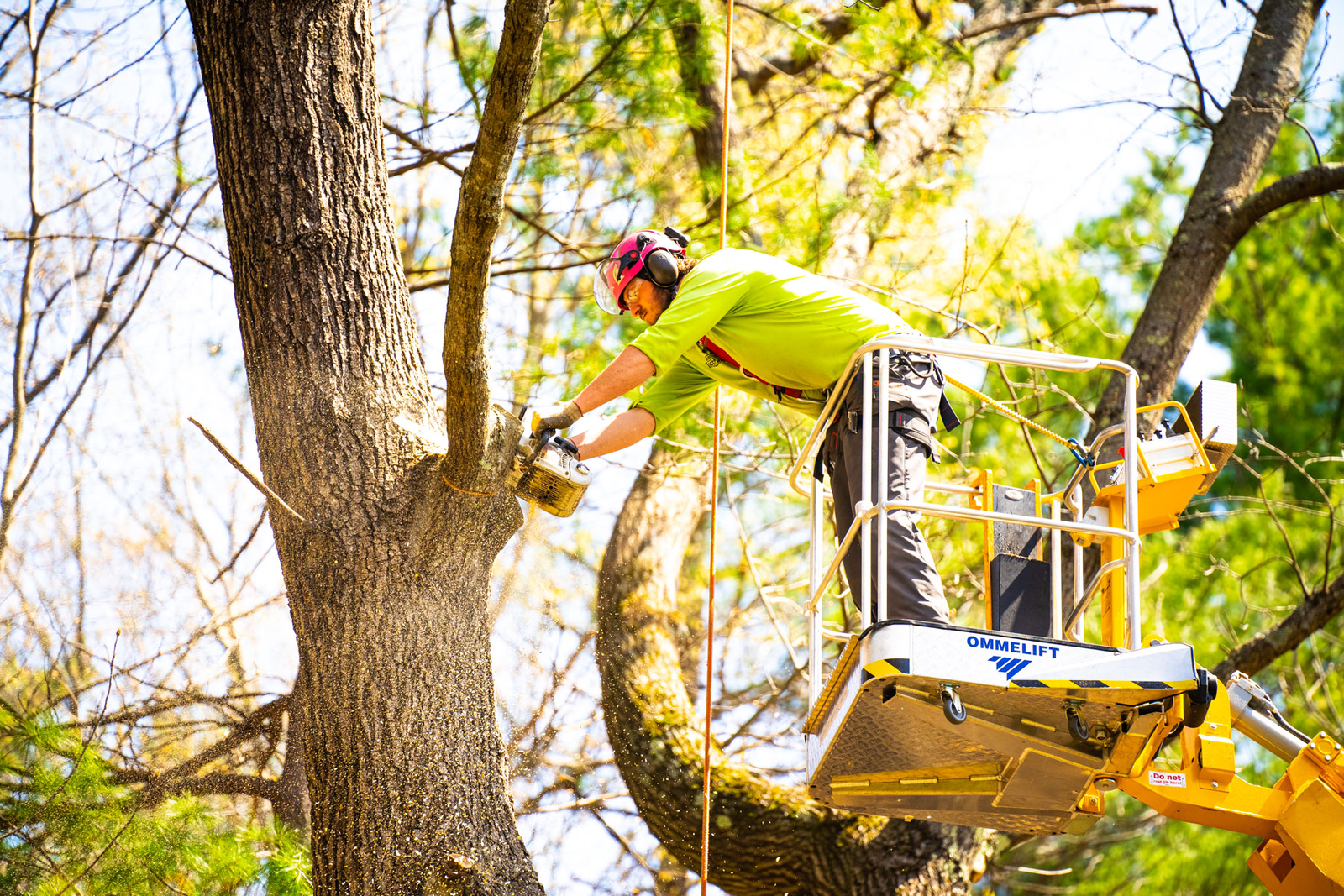
Always wear protective gloves, safety glasses, and sturdy footwear while pruning. A hard hat is recommended when working beneath large trees.
Best Tree Pruning Techniques
Following proper pruning techniques helps trees recover quickly and continue healthy growth.
Remove Dead, Diseased, and Broken Branches
The first step in pruning is removing branches that no longer contribute to the tree’s health.
Dead branches often become entry points for insects and fungi. Broken branches may split further during storms and create safety hazards.
Cut each branch back to healthy wood or to the branch collar where it joins another branch.
Cut Outside the Branch Collar
The branch collar is the swollen area where the branch connects to the trunk or another branch.
Always make pruning cuts just outside the branch collar.
Avoid cutting flush with the trunk because this damages tissue responsible for sealing the wound.
Leaving long stubs should also be avoided because they decay over time and attract pests.
Thin the Tree Canopy
Canopy thinning involves selectively removing smaller branches throughout the crown.
This technique provides several benefits:
- Improves airflow
- Increases sunlight penetration
- Reduces moisture buildup
- Lowers the chance of fungal infections
- Reduces wind resistance during storms
Avoid removing too many branches from one section of the canopy.
Remove Crossing Branches
Branches that cross or rub against one another create wounds in the bark.
These wounds allow insects and diseases to enter the tree.
Select the weaker branch for removal while preserving the stronger branch with better spacing.
Structural Pruning for Young Trees
Young trees benefit greatly from structural pruning.
The goal is to develop a strong framework that supports future growth.
Structural pruning includes:
- Maintaining one central leader
- Removing competing stems
- Selecting evenly spaced scaffold branches
- Eliminating weak branch angles
Early correction reduces the need for major pruning later.
Crown Raising
Crown raising involves removing lower branches to create clearance.
This technique is useful for:
- Sidewalks
- Driveways
- Roads
- Buildings
- Pedestrian areas
Remove lower limbs gradually over several years rather than removing them all at once.
Crown Reduction
Crown reduction reduces the overall size of the tree while maintaining its natural form.
Instead of cutting branch tips randomly, shorten branches back to healthy lateral branches.
This method maintains structure and reduces stress on the tree.
Best Time to Prune Trees
Timing plays an important role in successful pruning.
Winter
Late winter is considered the best time to prune many deciduous trees.
Trees are dormant during this season, making branch structure easier to see.
Pruning before spring growth allows wounds to begin sealing quickly.
Spring
Trees that bloom in spring should generally be pruned after flowering.
This allows flower buds to develop normally for the following season.
Summer
Light pruning during summer helps remove damaged branches and improve shape.
Avoid heavy pruning during periods of high heat.
Autumn
Autumn is usually not recommended for major pruning because healing slows as temperatures decrease.
Common Tree Pruning Mistakes
Many pruning problems result from incorrect techniques.
Avoid these common mistakes:
Topping Trees
Tree topping removes large portions of the upper canopy.
This practice weakens the tree, produces weak new shoots, and increases the risk of decay.
Selective pruning is a better alternative.
Removing Too Much Foliage
Never remove more than 20 to 30 percent of the canopy during one growing season.
Excessive pruning reduces the tree’s ability to produce food through photosynthesis.
Using Dull Tools
Dull blades crush branches instead of making clean cuts.
Sharp tools produce smooth wounds that heal more efficiently.
Ignoring Diseased Branches
Diseased branches should be removed promptly to reduce the spread of infection.
Always disinfect pruning tools after working on infected trees.
Tree Care After Pruning
Pruning does not end after branches are removed.
Proper aftercare supports recovery.
Water trees during dry periods, especially newly planted trees.
Apply mulch around the base while keeping it away from direct contact with the trunk.
Inspect trees regularly for signs of disease, insect activity, or broken branches.
Healthy soil, proper watering, and routine inspections contribute to long-term tree health.
Signs Your Tree Needs Pruning
A tree may require pruning if you notice:
- Dead branches
- Broken limbs
- Branches touching roofs or power lines
- Dense canopies blocking sunlight
- Crossing branches
- Storm damage
- Diseased limbs
- Unbalanced growth
Routine inspections help identify these issues before they become major problems.
Conclusion
Tree pruning is one of the most valuable practices for maintaining healthy, strong, and safe trees. Removing dead, damaged, and poorly positioned branches improves structure, increases sunlight penetration, supports air circulation, and reduces the risk of disease. Using the correct tools, making proper cuts outside the branch collar, and pruning during the appropriate season all contribute to successful tree care.
Regular pruning also improves the appearance of trees while helping them grow with a balanced structure that can withstand wind, storms, and changing weather conditions. Whether caring for young trees or maintaining mature specimens, following proper pruning techniques protects your landscape and extends the life of your trees. With careful planning and consistent maintenance, trees can remain healthy, productive, and attractive for many years.